

How to Get a Google Knowledge Panel for a Person
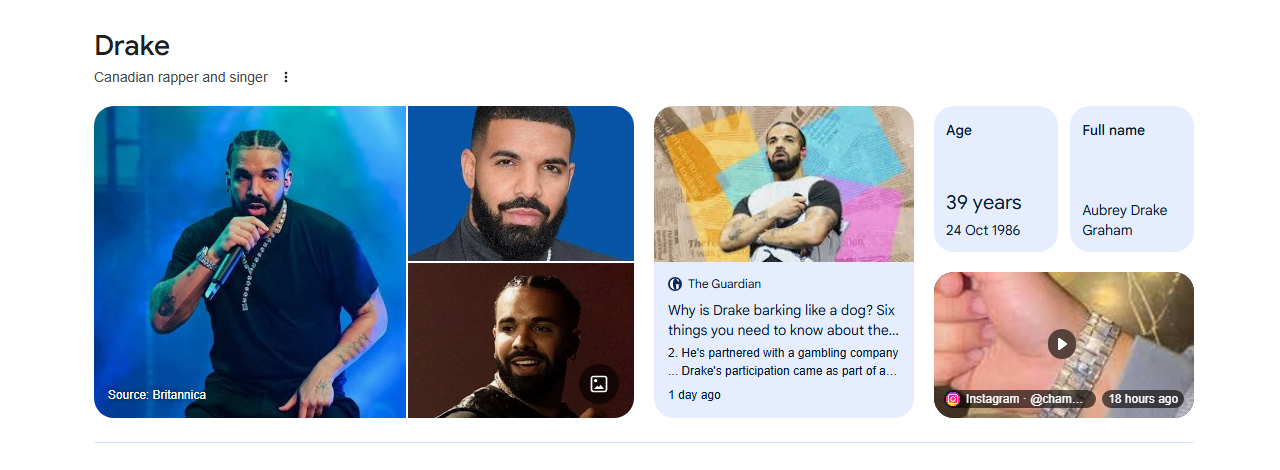
Google creates a Knowledge Panel when its systems are confident that a name refers to a specific person and that the public facts attached to that person are reliable enough to summarize. That can happen for a singer, magician, actor, artist, author, athlete, founder, executive or another public-facing professional. The job title is rarely the hard part. Identity clarity is.
The short answer
You cannot submit an order for a Knowledge Panel.
Google says Knowledge Panels are generated automatically from information gathered across the web and other sources. A person becomes panel-ready when Google can distinguish them from people with similar names, connect their work to the right identity and find enough dependable information to support the connection. An existing panel can then be claimed by the person or an authorized representative.
01
Who can get a Google Knowledge Panel?
There is no public list of approved professions. Google's own description of the Knowledge Graph covers people, places and things. In practice, panels appear for people whose work has created a public record that Google can understand.
A touring magician may have performance listings, theatre biographies, interviews and television appearances. A singer may have releases, label pages, festival listings and press coverage. An actor leaves credits and production records. A founder may be connected to a company, investments, speaking events and reporting about their work. These records look different, but they answer the same question: is this a real, identifiable person with a body of work that can be verified?
Google needs to see one person, one body of work and a set of facts that agree.
02
What Google needs to understand about a person
Think about the problem from the search engine's side. Two performers may share a name. One singer may release music under a stage name while interviews use a legal name. A founder may be confused with another executive in the same industry. A magician's official website may describe an international career while event pages use a shortened biography and an old photograph.
Google has to decide which pages refer to the same person, which facts belong together and whether the sources are dependable. Strong public identities tend to make five things clear.
- 01
The name is specific. The professional name, stage name and reasonable variations are used consistently enough to distinguish the person from namesakes.
- 02
The occupation is understandable. Sources broadly agree on what the person does and the work for which they are known.
- 03
The official presence is identifiable. Google can find a credible home base and connect it with legitimate profiles that belong to the same person.
- 04
The work is corroborated. Credits, appearances, releases, roles and achievements are supported by sources outside the person's direct control.
- 05
The facts do not keep changing. Major details such as names, occupations, affiliations and career history do not conflict across prominent pages.
03
How to prepare a person for a Google Knowledge Panel
The work usually starts with an audit, not publishing. Search the exact professional name, common variations and the name combined with the person's occupation. Record what appears, which identity Google seems to favour, where two people are being mixed together and which facts are repeated inaccurately.
Establish a clear official home
A personal website should make the identity obvious without turning into a wall of self-praise. Use the professional name in the page title and main heading. Provide a factual biography, current occupation, selected work, a suitable portrait and links to genuine official profiles. A press or contact route helps people verify who represents the person.
The site also needs to work technically. Important pages should be accessible to search engines, load well on phones and use stable URLs. Accurate structured information can describe the person and the page, but Google is explicit that markup does not guarantee a search feature. It has to match what visitors can actually see.
Make the public record easier to reconcile
Review the places where the person's work is already documented. Correct stale biographies where access is legitimate. Ask event organizers, publishers, production companies, professional bodies or other relevant organizations to use accurate information when they feature the person. Keep the same professional name and core description unless there is a real reason to change them.
This does not mean copying one biography onto dozens of weak profiles. Repetition can spread an error just as quickly as a fact. Google's systems compare information and relationships across the web. A smaller set of relevant, well-maintained sources is more useful than a large trail of pages created only for search visibility.
Build evidence through real work
A Knowledge Panel strategy cannot replace a public career. Releases, performances, exhibitions, publications, competitions, company milestones, interviews and documented professional roles create the evidence that search systems may later connect. The record should develop around genuine activity.
This is where professions differ. A singer's evidence may center on recorded music and live appearances. A magician's strongest trail may come from venues, festivals, broadcasts and reputable profiles. A founder's identity may depend on corporate roles, interviews and industry participation. The assessment has to fit the person rather than force everyone through the same checklist.
Avoid fabricated awards, purchased mentions presented as editorial coverage, fake profiles, misleading markup, keyword-stuffed biographies and networks of near-duplicate pages. These tactics introduce bad data and can violate Google's spam or structured data policies. They also make future corrections harder.
04
Why some people still do not receive a panel
Google does not publish a score or a standard waiting period. A person can have an official website, active social profiles and genuine press coverage without receiving a panel. Search demand may be limited. Sources may be too recent. The person may still be confused with someone else. Google may understand the identity but decide that a normal set of search results is the better presentation.
Follower count is not a published eligibility requirement. A large audience can create more public references, yet popularity by itself does not resolve conflicting facts. The same applies to verification badges on other platforms. They may help establish ownership of a profile, but they do not instruct Google to create a Knowledge Panel.
Timing also varies. Google has to discover changes, crawl the relevant pages and reassess the relationships between them. Anyone offering a fixed activation date is claiming control that outside agencies do not have.
05
How to claim an existing Google Knowledge Panel
Claiming starts after the panel appears. Search for the person while signed in to the Google Account that should manage the panel. Look for “Claim this knowledge panel” near the bottom of the panel or within its About section. Google may ask the person or representative to sign in through an official profile or provide more information.
Verification confirms the relationship between the account and the person. It does not transfer ownership of the panel. Verified users can suggest factual changes, submit supporting public URLs and manage authorized representatives. Google reviews the feedback and decides what to update.
A Business Profile is for a business that serves customers at a location or within a service area. A personal Knowledge Panel describes a recognized person or entity. They can look similar in Search, but the setup and management process is different.
06
Questions people ask before starting
Can anyone get a Google Knowledge Panel?
Yes, as long as the person's work and identity are documented clearly enough for Google to understand them as a distinct entity. Google does not publish a universal eligibility checklist or offer a form that creates a panel on request. Swoopler has successfully claimed more than 900 Knowledge Panels, so we understand the work required from preparation through verification.
How long does it take?
There is no standard timeline. Some cases take about two weeks, while others take two months or longer. A clear public record can still take time to be crawled and reassessed, and namesakes, stage names, conflicting biographies or thin source coverage tend to need more groundwork.
Does a person need to be famous?
Google uses its own systems to decide when a panel is useful. Public recognition helps produce information, but the practical issue is whether the person is understood and supported by dependable sources.
Can an agency guarantee a panel?
No agency can change Google's systems, but Swoopler commits to continuing the work until the panel is claimed or refunding the service fee if 90 days pass without a successful claim, subject to the service terms. We handle the identity review, corrections, official presence and legitimate source development needed for the process.
A sensible first step
Find out what Google understands about the person today.
Swoopler reviews the name, official presence, public source pattern, identity conflicts and technical setup surrounding a person. We have successfully claimed more than 900 Knowledge Panels and continue working until a panel is claimed, with a 90-day refund commitment if the claim has not succeeded, subject to the service terms. We do not sell fabricated authority or manipulate Google's systems.